


Running seems so simple, just lace up your shoes and go. Yet this straightforward activity delivers major rewards: stronger muscles, better cardiovascular health, improved endurance and that unbeatable endorphin rush.
But if you’re new to running, it’s natural to have questions about gear, nutrition and how to train. In this guide, you’ll find practical tips to stay injury-free, comfortable and motivated. By understanding seven of the most common beginner running mistakes, you’ll learn how to avoid them and get the most enjoyment out of every run.
Let’s dive into how to pace yourself, fuel properly and choose the right gear to set yourself up for running success.
*Note: Injinji does not offer medical advice. Consult with your doctor before starting any new exercise program.
#1 Running Too Much Too Soon
Don’t overdo it! It’s easy to get caught up in the excitement of starting a new running routine, but doing too much too soon is one of the most common beginner mistakes. Pushing your pace or distance too quickly can lead to fatigue or injury, so give your body time to adapt and recover between runs. As they say, slow and steady wins the race.
A great way to ease in is with the run/walk method. Start by running at a comfortable pace for one minute, then walking for two minutes. As your endurance improves, gradually increase your running intervals and shorten your walk breaks. Over time, you’ll build strength and stamina safely without overloading your body.
Overall: Listen to YOUR body. Staying consistent and injury-free are more important than speed or distance.

#2 Wearing the Wrong Clothing or Gear
Wearing clothes or shoes not designed for running can quickly turn a good run into an uncomfortable one, or worse, lead to blisters, chafing and even injury. To stay comfortable and protected, choose performance apparel and gear made specifically for running and don’t forget the right socks to prevent friction and hot spots.
When deciding what to wear, comfort and fit come first. Look for lightweight, breathable performance fabrics that wick away sweat and keep you dry. On cooler days, a good rule of thumb is to dress as if it’s about 10°F warmer than it actually is. You’ll warm up once you start moving.
#3 Not Prioritizing Foot Health
Invest in a quality pair of running shoes and performance toesocks. They can make all the difference. For the best fit, visit a local running store or REI for a professional fitting. Staff can analyze your gait to see whether you have a neutral stride, pronate or supinate, and recommend shoes that match your needs. Consider factors like cushioning (minimal vs. maximal), support or stability, and heel-to-toe drop. Above all, your shoes should feel comfortable from the first step, with just a bit of extra room in the toe box.
Pro tip: A roomy toe box will give your toes space to move more freely, help avoid blisters and more.

What are the best socks for running?
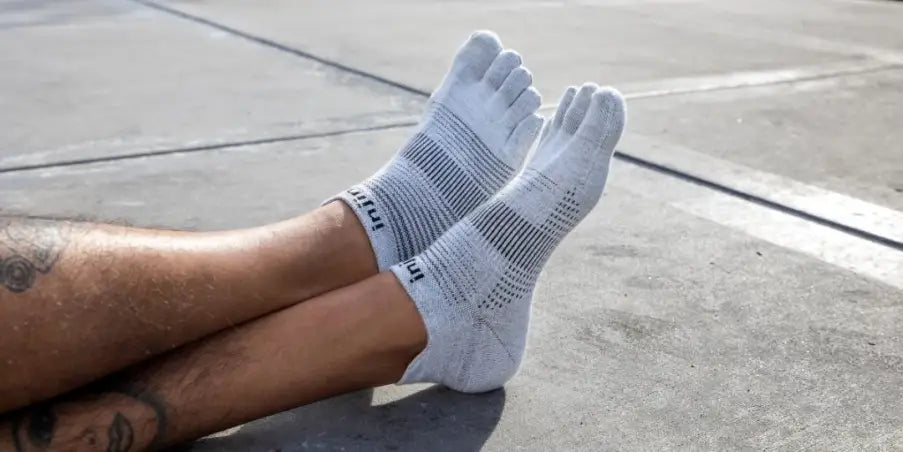
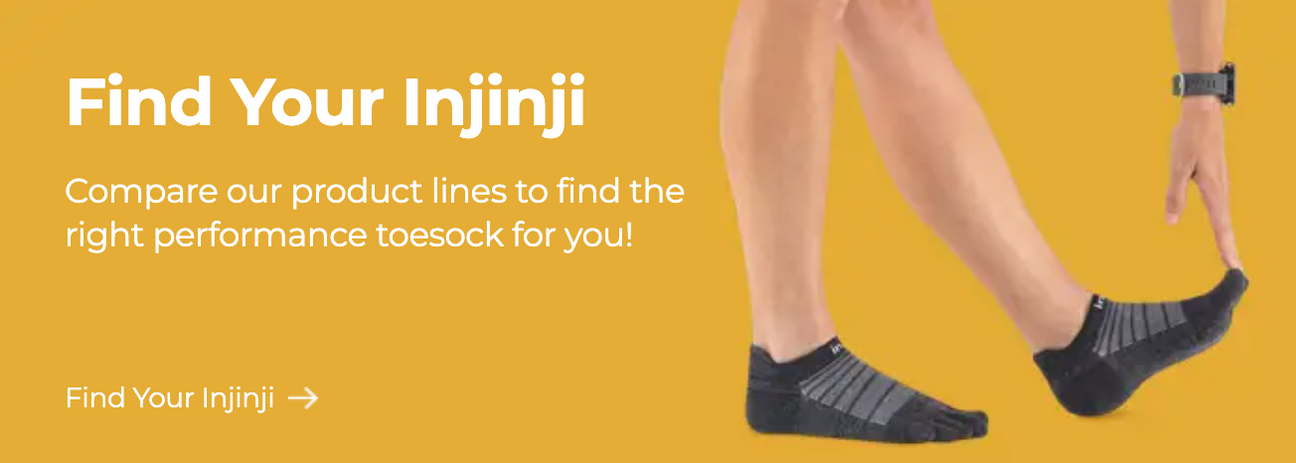
Want to optimize your foot health, prioritize healthy movement and achieve peak performance? When it comes to your socks, Injinji performance toesocks are the best socks for running. Injinji toesocks use patented five-toe technology to prevent blisters, manage moisture and promote total foot utilization. Each toe is individually wrapped, allowing your toes to splay naturally, so you get the best out of every mile. Injinji offers different options, weights and heights for various distances, terrains and personal preferences. These series below offer all the benefits above and more.
-
Run Series: These are Injinji’s original running socks and are great for anyone new to wearing Injinji toesocks. They’re extremely versatile and come in a variety of heights and weights depending on your personal preference.
-
Trail Series: These socks are specifically designed for running off-road. They seal out dirt and debris and have added arch support.
-
Ultra Run Series: This series offers maximum cushioning for the longest distances. These socks are best for high-mileage runners.
-
Snow Series: Engineered for the cold, Snow socks help you to maintain heat using THERMOLITE® EcoMade fibers to trap your body's natural infrared energy.
Learn more about the benefits of toesocks.
#4 Neglecting Nutrition or Hydration
Proper hydration and nutrition can make a huge difference in how you feel, both during and after your run. Staying hydrated and fueling your body with whole foods rich in healthy carbohydrates and protein will help you perform your best and recover more quickly.
When it comes to hydration, make sure to drink fluids before and after your run to replace what you lose through sweat. A good guideline is to drink about 16–20 ounces of water for every pound lost during exercise. For longer runs or hot conditions, bring water with you in a handheld bottle, waist pack or hydration vest, especially if your workout lasts more than an hour.
Remember, it’s not just water you lose when you sweat, it’s electrolytes too. These essential minerals help your muscles contract, maintain fluid balance and prevent cramping. If you’re running in the heat, training for long periods, or tend to sweat heavily, consider adding electrolytes or salt tabs to your hydration plan. If you’re tackling longer distances, endurance sports drinks like Tailwind are great for both replacing electrolytes and fueling your body with carbohydrates while on the run.

#5 Skipping Warm-Ups and Cool Downs
Make sure to budget time for a warm-up and a cool down. Even 5-10 minutes can make a huge impact! Adding warm-ups and cool downs into your routine can keep you from getting injured and help your body adjust to your new running routine.
A typical warm-up includes mobility exercises, dynamic stretches and light strength work (e.g., air squats, side lunges and high knees). These moves help prepare your muscles, ligaments and body for the movement and impact of running. When you’re ready to start running, ease into it by starting slow and gradually increasing your pace.
For your cool down, ease out of your run just as you eased in. Slow your pace down (perhaps walking for the final 5 minutes) and finish off your workout with dynamic stretching, especially your hamstrings, quads and hip flexors.
#6 Losing Your Motivation
All runners have days where they don’t feel like getting out there to run. Having motivational strategies ready will help you to build your new running habit. A running buddy or running group is a great way to hold yourself accountable. Plus, it turns your run into social hour. Your workout will be over before you know it!
Running playlists, like this one made by Team Injinji Athletes, can help you to stay motivated on your run as well! Be aware of your surroundings when listening to music while running. Wearing open ear, bone conduction headphones like Shokz or only one earbud so you can still hear what’s going on around you.
#7 Forgetting to Track Your Progress!
One of the most rewarding parts of running is seeing your progress. Maybe your pace gets faster, your endurance improves or your runs simply start to feel easier. Tracking your workouts helps you notice these gains and stay motivated along the way.
You can use a running watch, an app like Strava or even a simple journal to record your runs. Track not just your pace, time or distance, but also how you feel: energy levels, mood and effort. These notes help you see trends beyond the numbers.
Many training programs include a benchmark workout for example, running the same route or distance and timing it, or seeing how far you can go in a set amount of time. Repeat this workout every few weeks to measure your progress. Watching your improvement over time is not only motivating, but also a great reminder of how far you’ve come.

Starting to run is simple. Becoming a runner is a mental shift. No matter the pace or the distance, it’s about changing how you view yourself. And if you’ve made it here, you’re already a step in the right direction. Welcome to the (running) club – you’re one of us now.